

- Accede I
- Regístrate I
- carrito

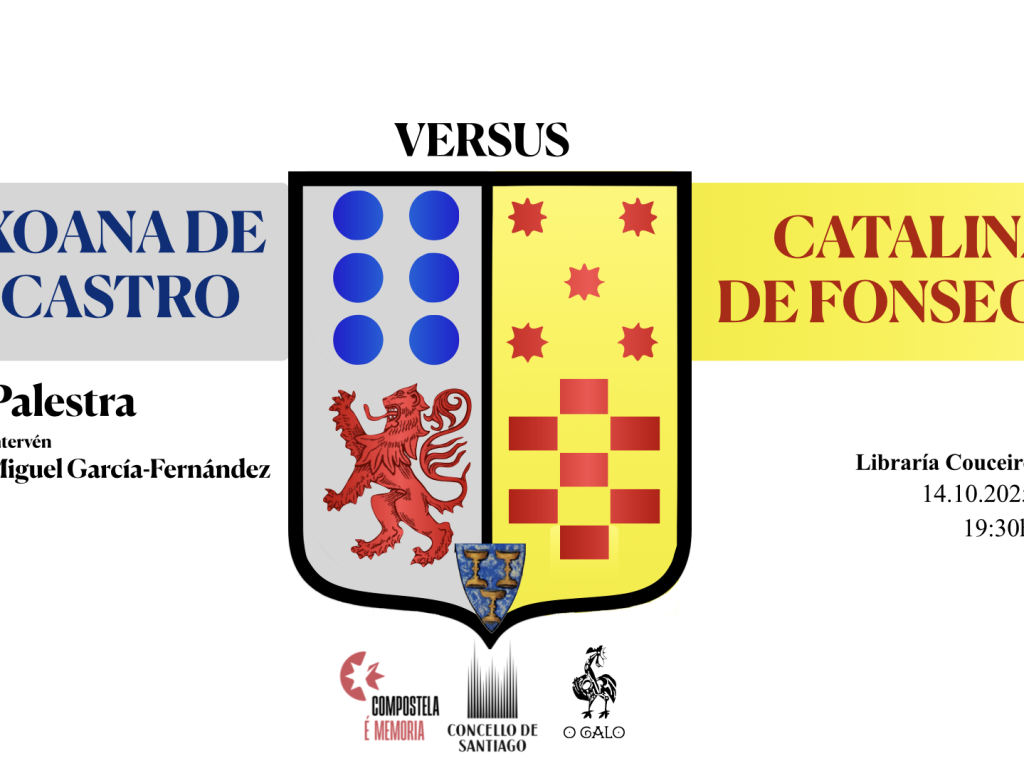
Dona Xoana de Castro vs. Dona Catalina de Fonseca: mulleres con poder nos conflitos composteláns do século XV
Conferencia impartida por Miguel García-Fernández, del Instituto de Estudios Gallegos Padre Sarmiento (CSIC-Xunta de Galicia). Organizada por la Asociación Cultural O Galo.
En la Compostela del siglo XV, los intensos conflictos entre la nobleza y la burguesía contra el poder arzobispal permitieron que algunas mujeres alcanzasen un notable protagonismo en la vida política del reino medieval de Galicia. Entre ellas destacaron doña Xoana de Castro y doña Catalina de Fonseca, cuyas trayectorias ilustran dos ejemplos del ejercicio del poder y de la agencia de las mujeres en un contexto de tensiones, violencias y negociaciones, que, por otra parte, también se documenta en otras ciudades gallegas, como sucedió poco antes en la ciudad de Ourense con el caso de doña Beatriz de Castro. Así, sus casos, unidos a otros de mayor fortuna historiográfica –aunque con bastantes más problemas a la hora de abordarlos– como el de María Castaña en la tierra lucense en el siglo XIV, permiten cuestionar las imágenes que, tanto en la investigación como en la divulgación, siguen asociándose a la vida, el papel y el protagonismo de las mujeres en el seno de la sociedad medieval y, especialmente, en relación con la conflictividad de su tiempo.
En este sentido, las fuentes documentales demuestran cómo doña Xoana de Castro, viuda de Rodrigo de Moscoso, actuó como líder y mediadora en las tensiones entre la ciudad y el arzobispo don Rodrigo de Luna en el marco de la revuelta que afectó al señorío de Santiago entre 1458 y 1460. Al frente de la familia de los Moscoso junto con sus hijos Bernal Eanes y Lopo Pérez, doña Xoana representó a la linaje en la que se había integrado por matrimonio dentro de las diferentes alianzas y pactos de resistencia que sus miembros establecieron contra el señor de Compostela. Así, por ejemplo, en 1458 aparece firmando los estatutos de una hermandad rebelde, junto a diversos miembros de la nobleza compostelana y otros grupos de poder de la Tierra de Santiago, donde se exaltaba la defensa de la “libertad de la ciudad” frente al señorío episcopal. De hecho, su nombre figura reiteradamente en los acuerdos de la Hermandad, signo del pleno reconocimiento de su autoridad en el contexto social y político del momento.
Además, el 1 de septiembre de 1459 participó en el armisticio acordado en la Porta de Mazarelos, jurando personalmente ante el altar mayor de la catedral cumplir los términos de la paz. Ese mismo año, el rey Enrique IV ordenó que ella y su hijo devolvieran al arzobispo los castillos tomados durante la guerra. Por tanto, los documentos conservados demuestran claramente su papel decisivo en la negociación y mediación políticas: incluso su hijo Bernal Eanes de Moscoso le otorgó poder para igualarse con el prelado en nombre de la familia. Sin embargo, las crónicas coetáneas apenas mencionan a doña Xoana en estos acontecimientos, lo que constituye un claro reflejo del androcentrismo cronístico que silenció en buena medida la participación femenina en los conflictos urbanos de la Edad Media y, por tanto, la necesidad de consultar otras fuentes más próximas a los hechos.
Por su parte, doña Catalina de Fonseca, madre del arzobispo Alonso de Fonseca (II), representa la otra cara del mismo conflicto, prolongado algunos años después. Es decir, aun siendo mujer, doña Catalina llegó a encabezar la representación del bando arzobispal. Desde la posición de poder que le otorgaba su maternidad, defendió la sede compostelana durante el asedio de 1466 llevado a cabo por los Moscoso y sus aliados. Y, de hecho, el eco de sus propias palabras, conservadas a través de documentos del Archivo de la Catedral de Santiago, nos informa de cómo doña Catalina llegó a tomar dinero y joyas del tesoro catedralicio para mantener la defensa de la iglesia, de la ciudad y del arzobispo, quien en ese momento estaba preso por el bando de los Moscoso. Su testimonio revela, pues, que se trataba de una mujer activa, que asumió funciones logísticas, financieras y de mando militar en plena guerra.
Las actas capitulares registran al mismo tiempo su intervención directa en los hechos. De hecho, por orden suya fueron apresados varios miembros del cabildo, lo que provocó el cerco catedralicio por parte de los sublevados contra el señorío arzobispal. Al mismo tiempo, las crónicas extranjeras refuerzan esta imagen. A raíz del viaje de León de Rosmithal, noble bohemio que peregrinó a Compostela, se escribieron dos relatos en los que se cuenta cómo doña Catalina era vista como una mujer “malvada” por sus enemigos, pero al mismo tiempo se la presenta como una mujer piadosa y hospitalaria con los forasteros, decidida a continuar su lucha y a no rendir “la casa de Dios”.
Doña Catalina, pues, encarna así una autoridad maternal y política, enfrentada a la rebeldía laica y nobiliaria de los Moscoso y, consecuentemente, también a la de doña Xoana de Castro. Ambas, desde posiciones opuestas, muestran que las mujeres podían ocupar espacios de liderazgo político y simbólico en los conflictos urbanos gallegos, actuando como negociadoras, financiadoras o estrategas. Solo un acuerdo final de 1466, donde se menciona de nuevo a “doña Joana de Castro”, junto a otros nobles varones, en los términos de perdón del arzobispo Fonseca, cerrará un ciclo de guerra en el que ambas mujeres fueron protagonistas y adversarias.
En definitiva, doña Xoana y doña Catalina simbolizan dos rostros del poder femenino medieval: la rebelde que desafía la autoridad eclesiástica en el marco de las reivindicaciones y luchas propias de las linajes nobiliarias de su tiempo, y la madre episcopal que defiende la legitimidad del señorío de su hijo, adquiriendo un papel capital al frente de una de las instituciones más androcéntricas del momento, como era la Catedral de Santiago. Ambas rompieron con los márgenes tradicionales de género, dejando una huella apenas perceptible en las crónicas, pero viva en los documentos y memorias que rescatan sus voces. Su enfrentamiento no fue solo político, sino también representativo de una pugna más amplia entre la rebeldía y la legitimidad, entre la resistencia urbana y el poder señorial, y entre dos mujeres que, desde bandos opuestos, demostraron que en la Galicia del siglo XV también las mujeres podían ejercer el poder y la palabra.
Galería de imágenes
Dona Xoana de Castro vs. Dona Catalina de Fonseca: mulleres con poder nos conflitos composteláns do século XV

de Agenda cultural por RSS
Fiestas

La Festa del Banquete de Conxo contará con el tren turístico, que va a estar a disposición de la ciudadanía y visitantes para traslados gratuitos entre la Alameda, en el centro de la ciudad, y el barrio de Conxo.

NoitiNHas 2026 regresa con su novena edición para llenar las noches compostelanas de música en directo y propuestas gastronómicas. El ciclo, que se celebra en el NH Collection Santiago, combina conciertos al aire libre con sesiones DJ y tapas de restaurantes invitados, creando una experiencia completa en torno a la música y el sabor.